
A workplace strategy to support a growing investment firm's stay/go decision while strengthening culture and connection.
Finance
Sector
New York, NY
Location
Central Challenge:
A growing financial services firm faced a pivotal decision: remain in its current location or relocate to support future growth. While additional space was needed, leadership was equally focused on preserving the culture, connectivity, and sense of community that had defined the organization during its earlier years. The challenge was to quickly evaluate multiple real estate scenarios while ensuring future workplace decisions reinforced, rather than diminished, the firm's culture.
Our Approach:
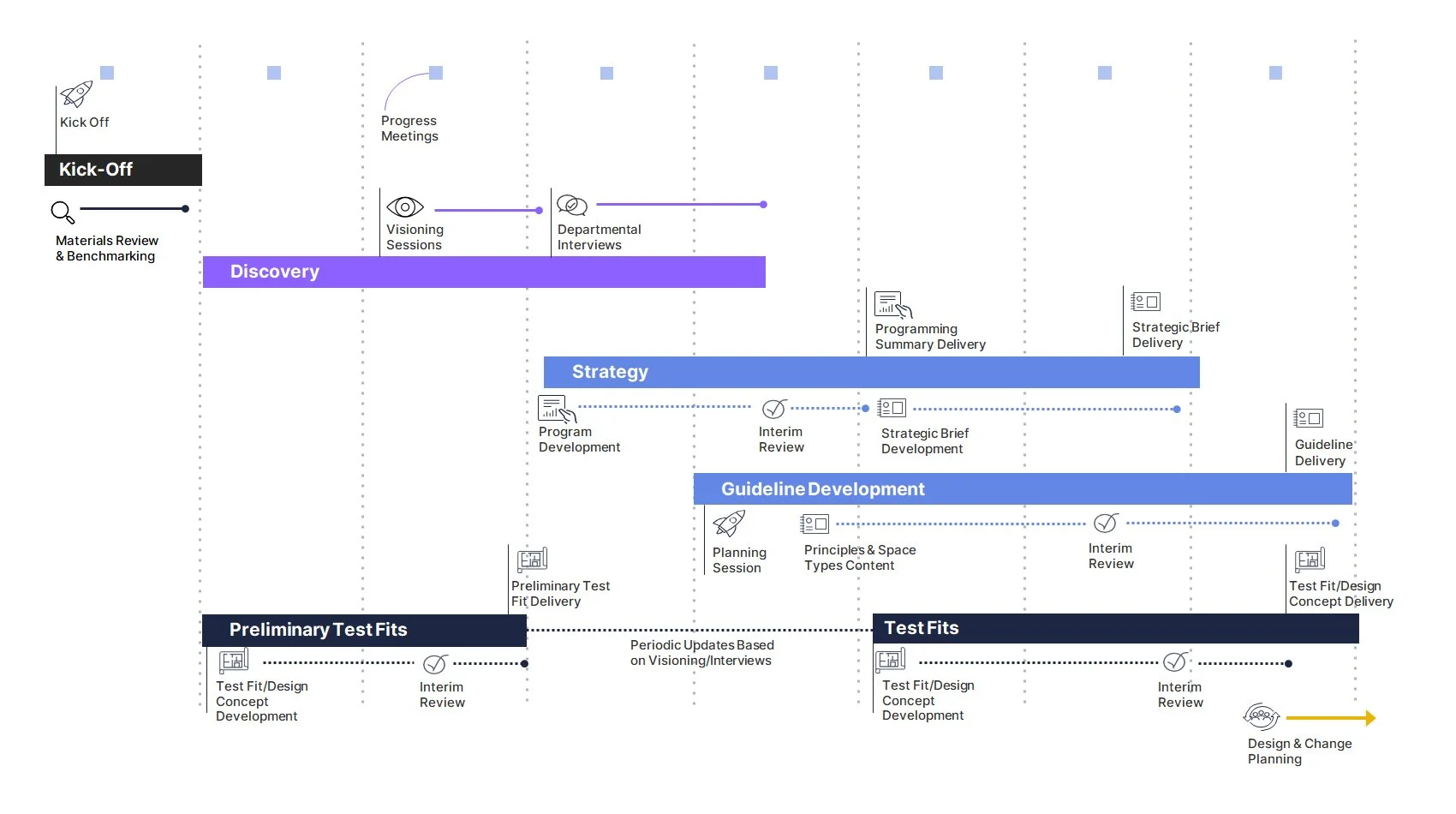
Ark and HLW developed a streamlined visioning and programming process designed to support rapid decision-making. Through leadership workshops and stakeholder interviews, the team focused conversations on workplace needs, behaviors, and cultural priorities rather than specific locations. This approach enabled the development of a site-agnostic workplace program that could be tested across multiple buildings while a broader cultural framework was established in parallel.
Our Process
Tactics:
Two leadership visioning sessions and a series of stakeholder interviews uncovered the workplace characteristics most critical to the firm's continued success. By intentionally removing discussions of potential locations from the early stages of planning, Ark and HLW were able to gather workplace requirements quickly, eliminate unnecessary speculation, and establish a clear understanding of how the workplace could better support collaboration, mentorship, and growth.
The resulting program provided a flexible foundation for evaluating multiple occupancy scenarios while maintaining focus on the employee experience.
Visioning Session Findings
Enabling the Transition
As test fitting and workplace planning progressed in parallel, the program was refined to reflect the capabilities of each potential location. Following the evaluation phase, Ark and HLW supported lease negotiations and developed workplace planning strategies tailored to the selected space.
The final recommendations focused on creating an environment that encourages interaction, supports evolving workstyles, and accommodates future growth while preserving the firm's culture. By linking workplace strategy directly to real estate decision-making, the team enabled leadership to move forward with confidence and a clear vision for the future.
Key Findings
Key Finding #1
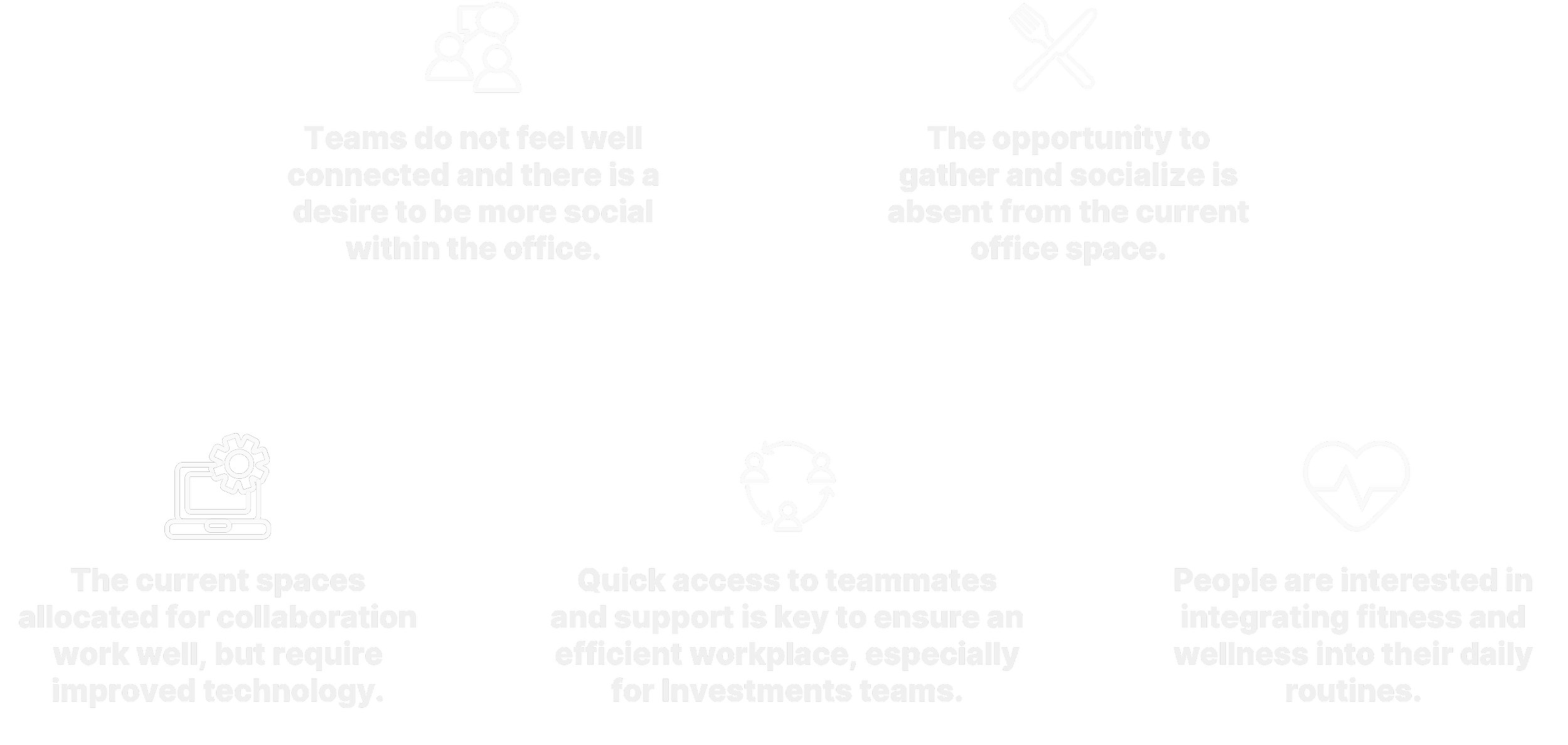
Teams are not well connected and there is a desire to be more social in the office.
Recommendation #1
Recommendation #2
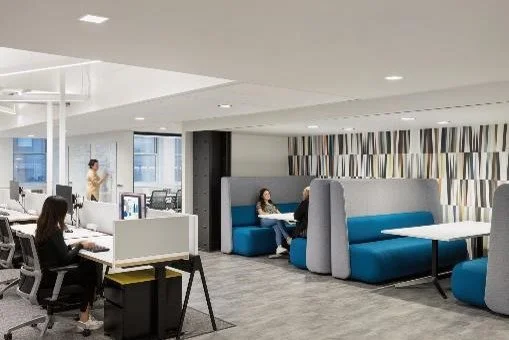
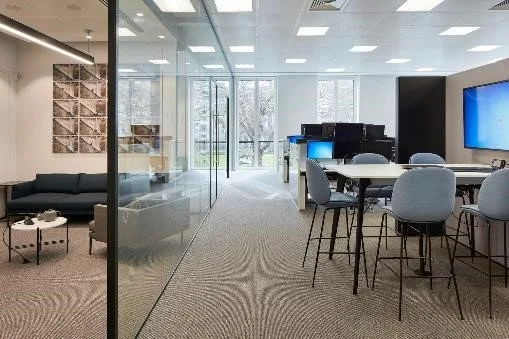
Provide organic opportunities within the workplace to break down silos and build connections among teams.
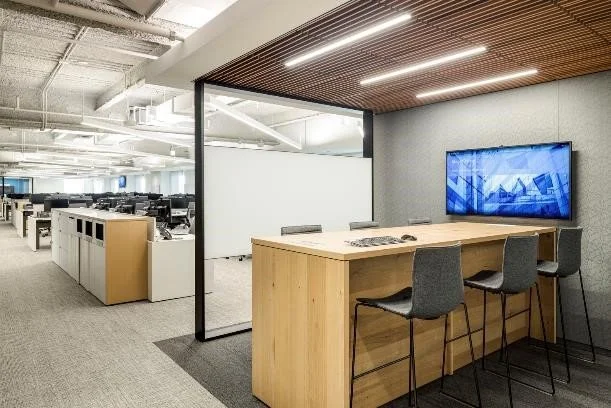
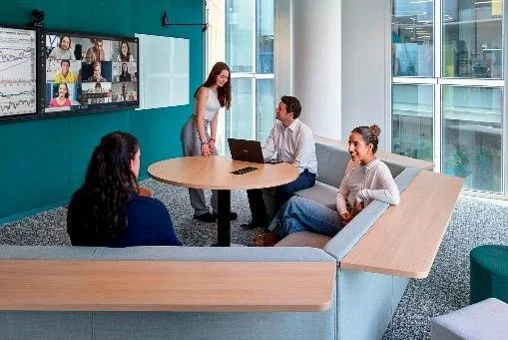
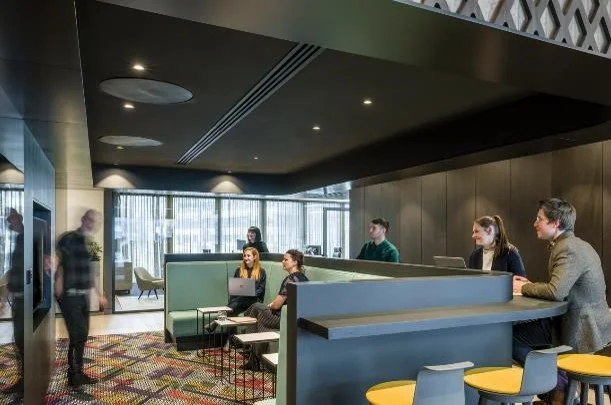
Install a variety of collaboration options to accommodate different workstyles and spark movement.
Key Finding #2
“An opportunity for bumping into each other naturally is important where possible.”
-Marketing
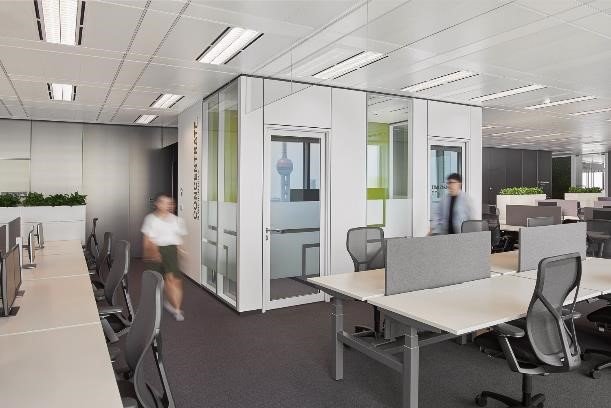
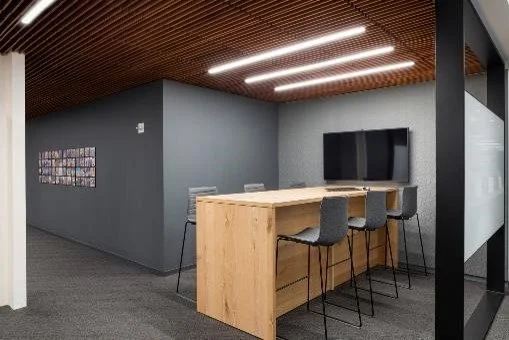
Use “drop-in” space for each team to encourage working with other teams.
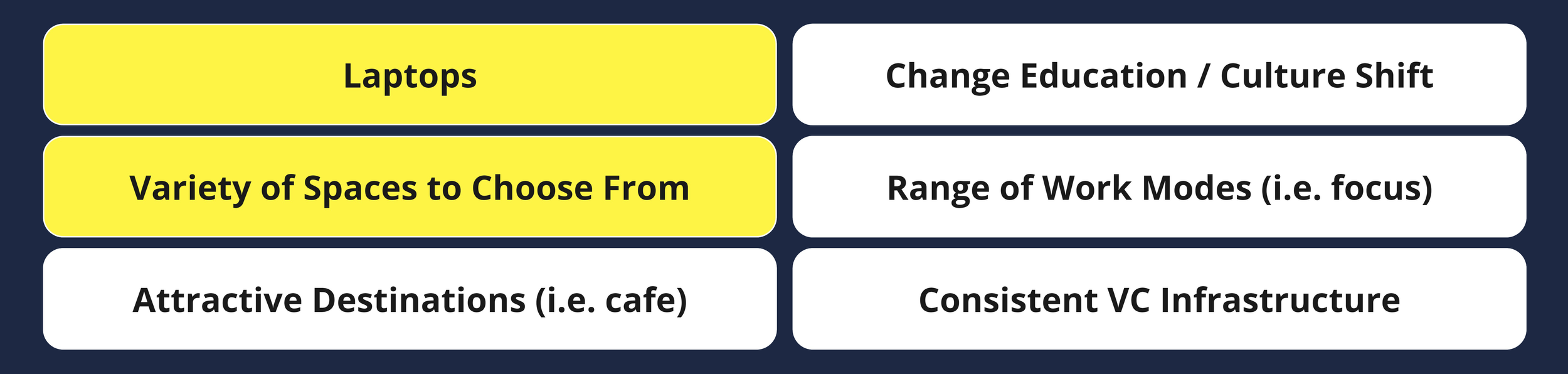
Which of the following is most critical to encourage mobile behaviors?
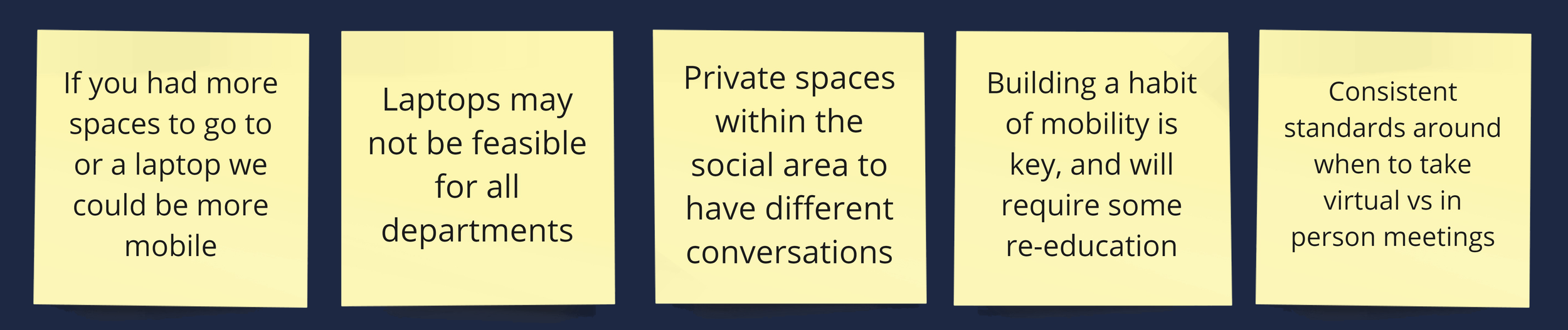
What will be the greatest challenge in creating a more mobile workplace?
Key Finding #3
Provide desktop computing power at alternate work settings for mobility.
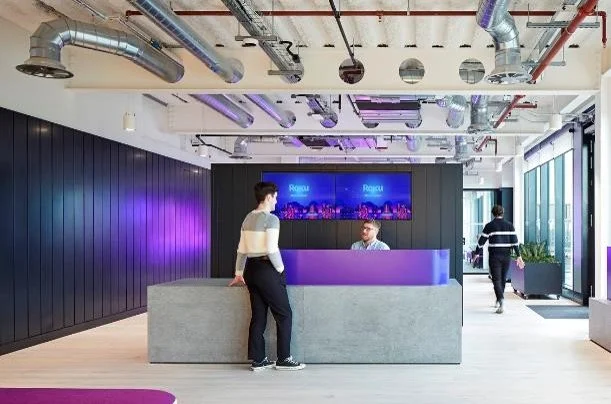
Create branded moments throughout the space to build connection to mission.
The current spaces allocated for collaboration work well, but require improved technology.
During Visioning, we asked attendees: How mobile are you today? How mobile should you be tomorrow?

Merge the use of space and technology to enable a seamless work environment.
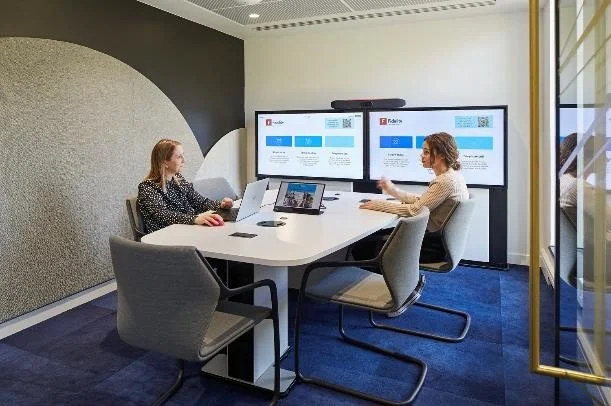
Improve meeting room displays and ease of connecting.
Recommendation #3
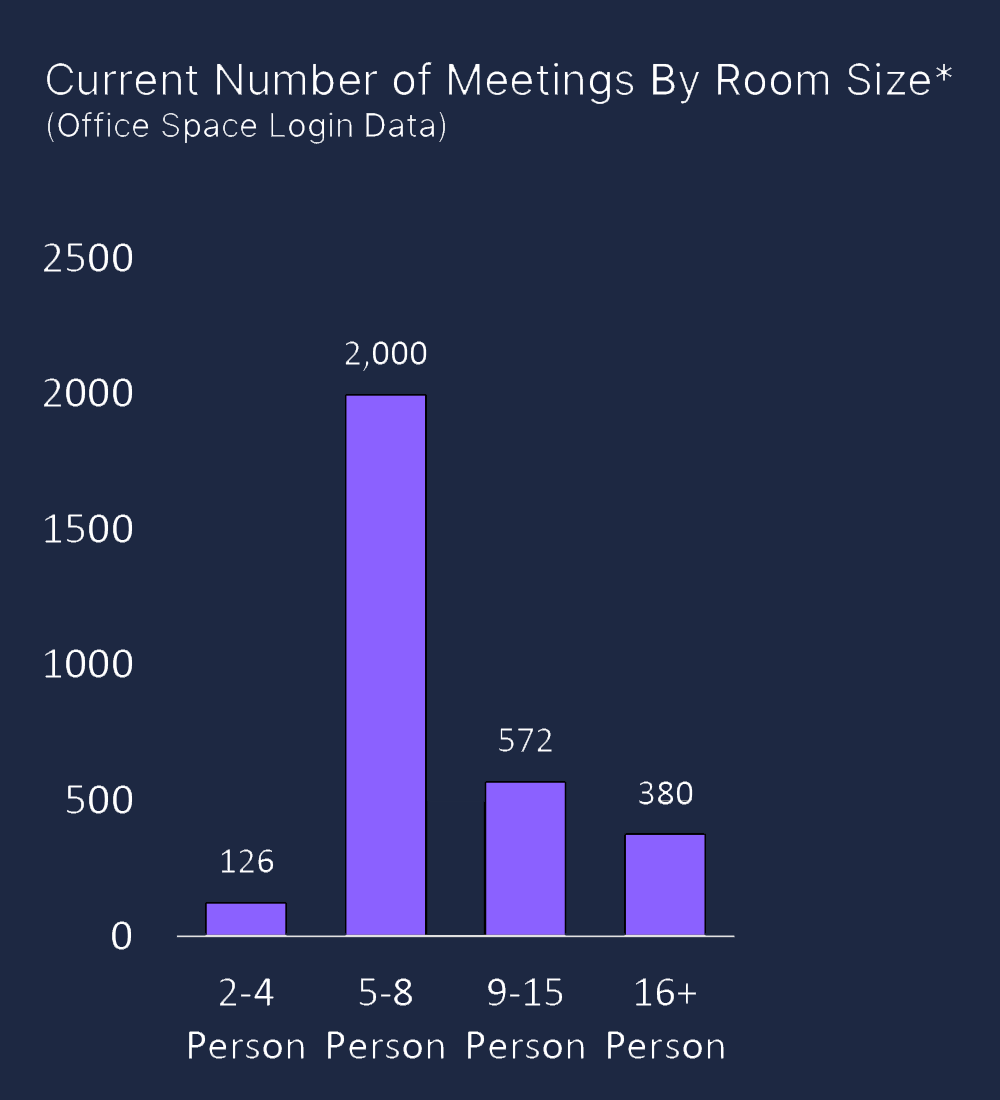
65% of meetings today use a 5-8-person room. Some of these meetings are of a smaller size.
Recommendations
Establish a laptop rollout process that allows employees to be more agile.
Close at-hand access to teammates and supporting services is key to ensure an efficient workplace, especially for the investment teams.
Rethink the private office and promote flexibility in the floorplate.
Eliminate perimeter offices
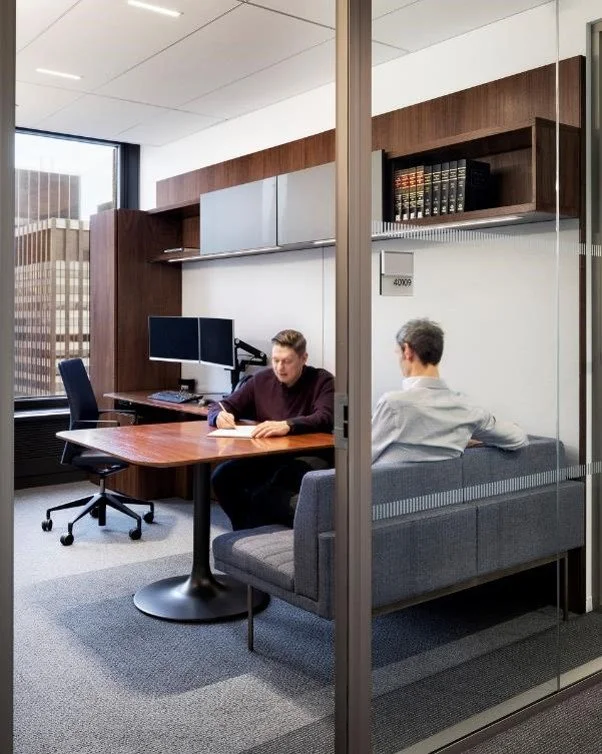
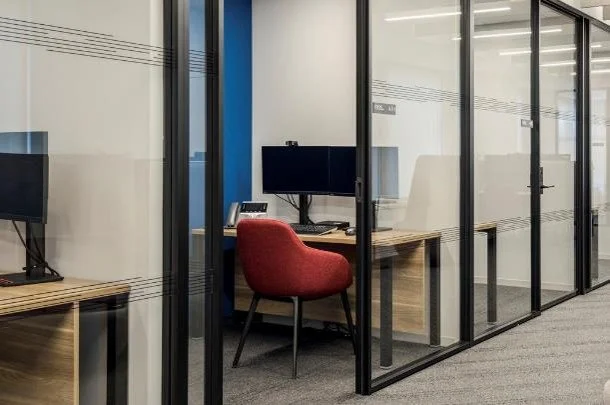
Move all offices off the perimeter to maximize daylight and views into the space for all employees. This signals a more democratic office environment and reduces a feeling of hierarchy. Consider reducing size or office assignments.
Introduce a “flex office” space type
Many team members benefit from the reduced noise and distraction a private office provides. Including a few unassigned offices that can function as meeting space or individual workspace.
Rethink office assignment
Ratchet up the flex office concept and eliminate assigned offices except for a few well defined exceptions. This reduces hierarchy, allows for more flexible floor plates, makes team restacks easier and can reduce overall square footage.
Key Finding #1
Teams are not well connected and there is a desire to be more social in the office.
Recommendation #1
Recommendation #2
Provide organic opportunities within the workplace to break down silos and build connections among teams.
Install a variety of collaboration options to accommodate different workstyles and spark movement.
Key Finding #2
“An opportunity for bumping into each other naturally is important where possible.”
-Marketing
Use “drop-in” space for each team to encourage working with other teams.
Which of the following is most critical to encourage mobile behaviors?
What will be the greatest challenge in creating a more mobile workplace?
Key Finding #3
Provide desktop computing power at alternate work settings for mobility.
Create branded moments throughout the space to build connection to mission.
The current spaces allocated for collaboration work well, but require improved technology.
During Visioning, we asked attendees: How mobile are you today? How mobile should you be tomorrow?
Merge the use of space and technology to enable a seamless work environment.
Improve meeting room displays and ease of connecting.
Recommendation #3
65% of meetings today use a 5-8-person room. Some of these meetings are of a smaller size.
Establish a laptop rollout process that allows employees to be more agile.
Close at-hand access to teammates and supporting services is key to ensure an efficient workplace, especially for the investment teams.
Rethink the private office and promote flexibility in the floorplate.
Eliminate perimeter offices
Move all offices off the perimeter to maximize daylight and views into the space for all employees. This signals a more democratic office environment and reduces a feeling of hierarchy. Consider reducing size or office assignments.
Introduce a “flex office” space type
Many team members benefit from the reduced noise and distraction a private office provides. Including a few unassigned offices that can function as meeting space or individual workspace.
Rethink office assignment
Ratchet up the flex office concept and eliminate assigned offices except for a few well defined exceptions. This reduces hierarchy, allows for more flexible floor plates, makes team restacks easier and can reduce overall square footage.