
June 2026
Workplace Recovery | Micro-Retreats: Tiny Spaces, Big Recovery
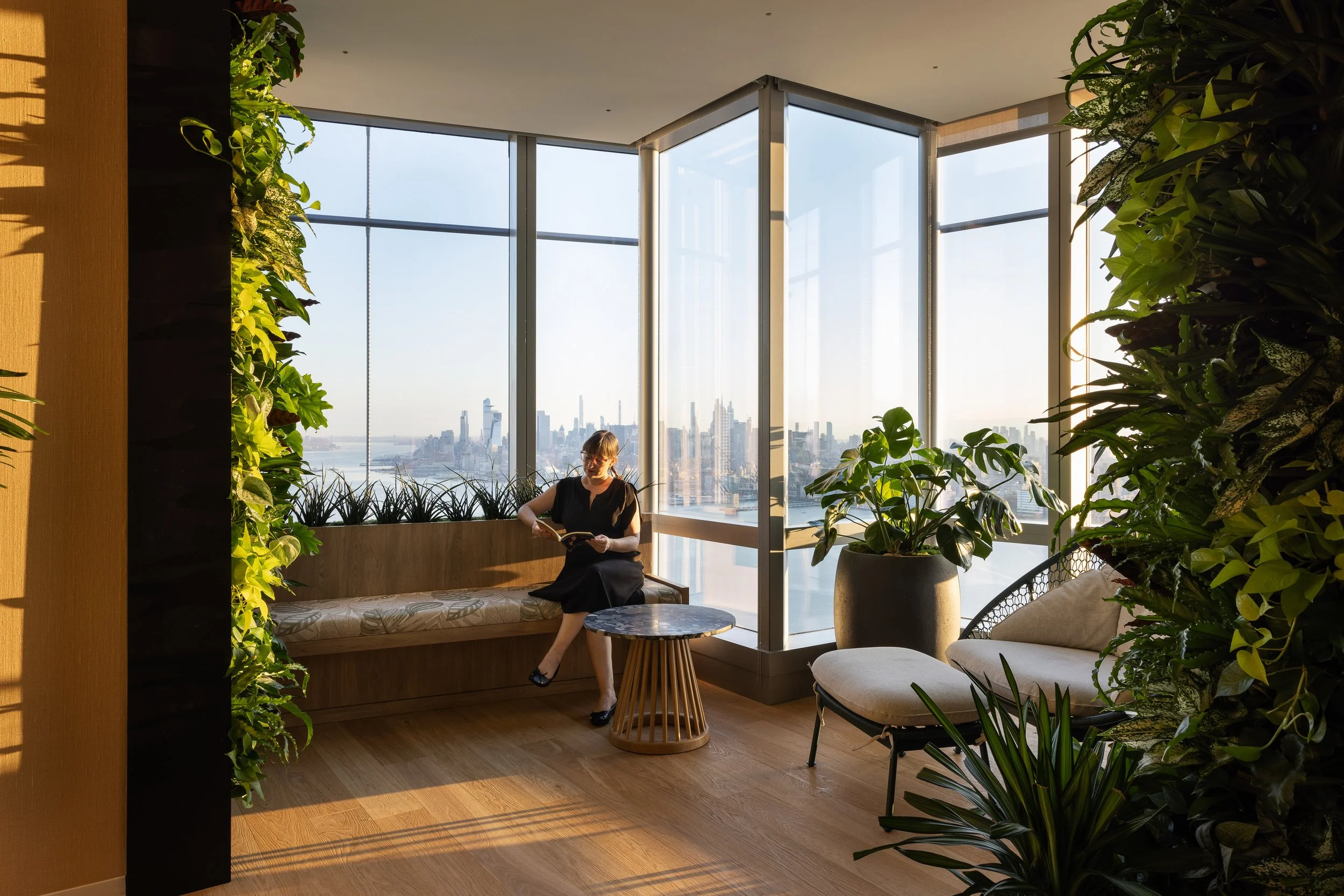
Most workplaces still concentrate wellness investment in a single enclosed room, but research on restorative environments suggests that frequent, low-friction moments of pause may be more effective than occasional visits to one destination. Attention Restoration Theory argues that mental fatigue improves when environments create a sense of being away, gently hold attention, and align with what a person needs in the moment.
Why This Matters
As organizations ask more of the office (more focus, collaboration, learning, connection, etc.), the need for small-scale restoration becomes critical. A network of micro-retreat spaces turns overlooked areas into valuable program by repurposing window edges, widened corridors, threshold zones, circulation pockets, and stair landings as one- or two-person spaces for short resets close to where work takes place. The value is not simply adding amenities, but making restoration visible, equitable, and easy to access throughout the floorplate.
Design Moves to Consider
Research points to a clear set of design variables that determine whether a small space feels restorative rather than leftover.
Visual privacy: Partial enclosure, layered sightlines, and side entry seating support a sense of refuge without full isolation.
Soft acoustics: Upholstery, acoustic panels, curtains, and ceiling treatments reduce speech spill and cognitive load.
Controllable lighting: Dimmable or tunable lighting allows users to adjust brightness and tone for decompression, rest, or quiet focus.
Comfort cues: Lounge-height seating, perches, and small side tables signal that the space is for pause and regulation, not simply overflow work.
Biophilic signals: Daylight, planting, green views, and natural materials reinforce restorative perception and support emotional regulation.
HLW Precedents
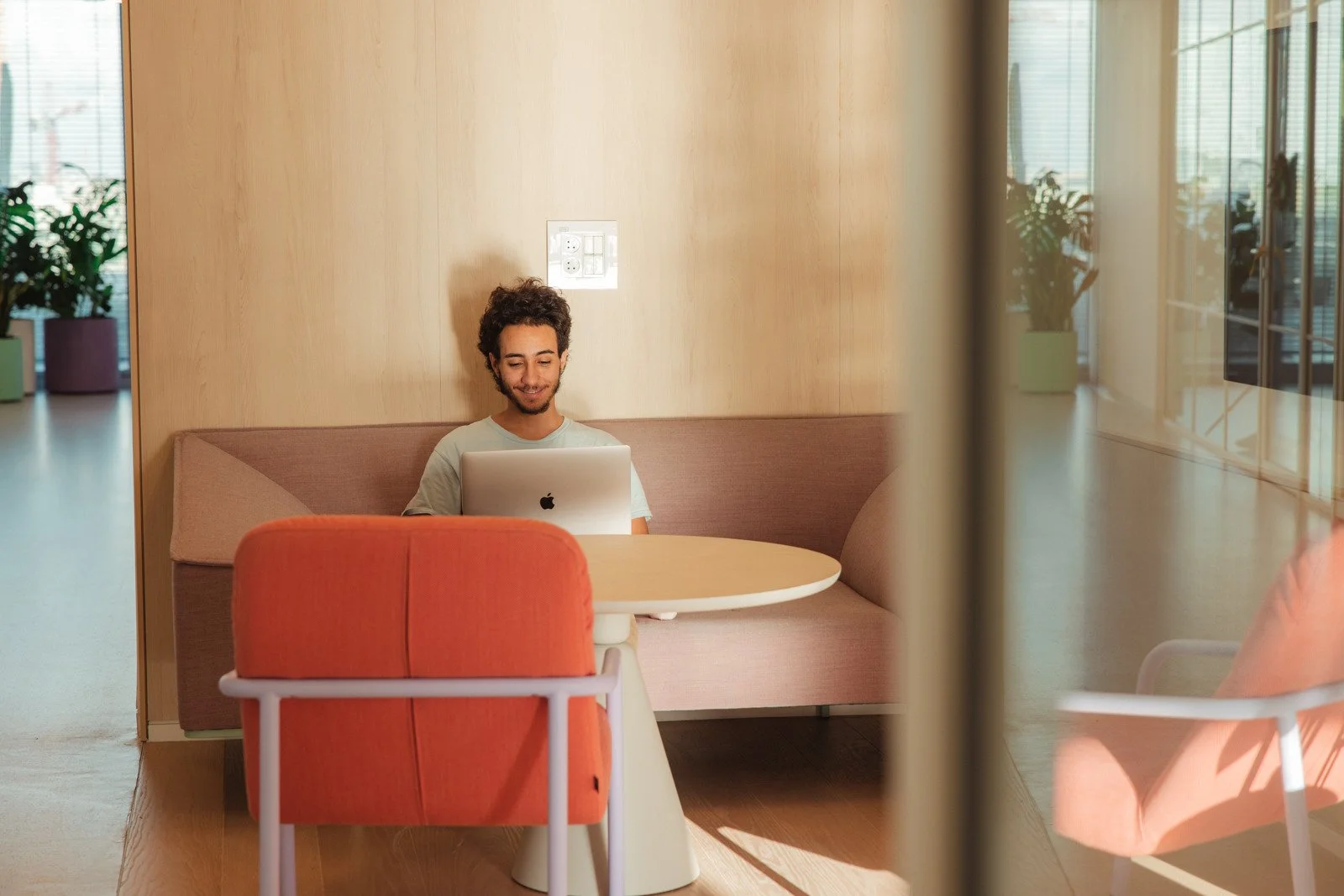
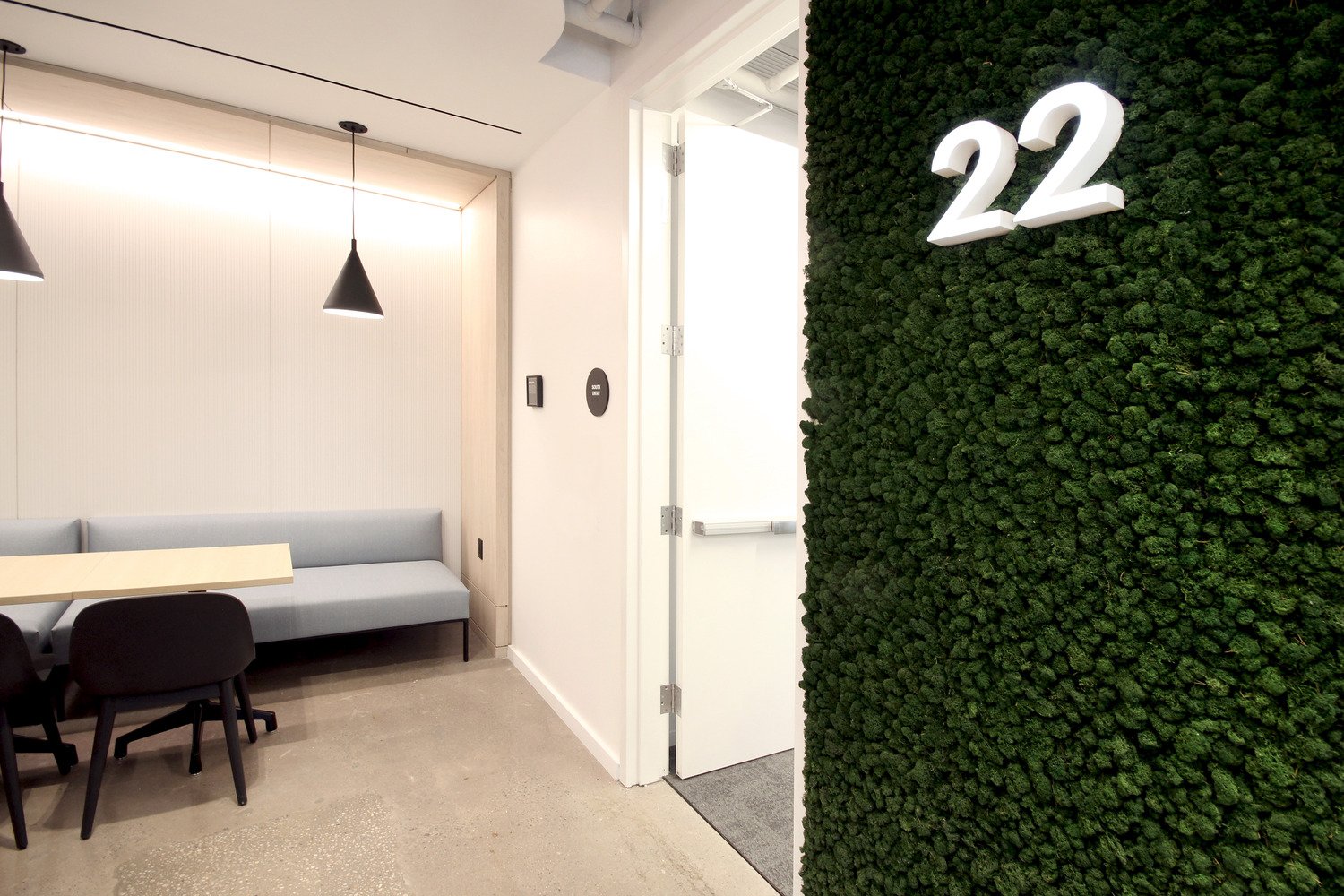
HLW’s projects already suggest how this logic can be applied at multiple scales. Schrödinger New York layers varied work settings and wellness-focused amenities across a dense four-floor headquarters, with lighting designed to support mood and productivity in different zones (image shown below right). At a larger scale, the Wix Campus extends the same idea across seven interconnected buildings, pairing workspaces with herb gardens, treatment rooms, fitness studios, and other specialized destinations that make restoration visible and accessible throughout the day (image shown below left).
Moving Forward
The lesson here is not that every office needs more square footage for wellness, but that recovery should be distributed, legible, and close at hand. A successful micro-retreat network depends less on size than on placement, sensory tuning, and clear signals that invite people to pause, reset, and return to work with less friction.