
September 2026
How AI is Actually Making the Workplace More Human
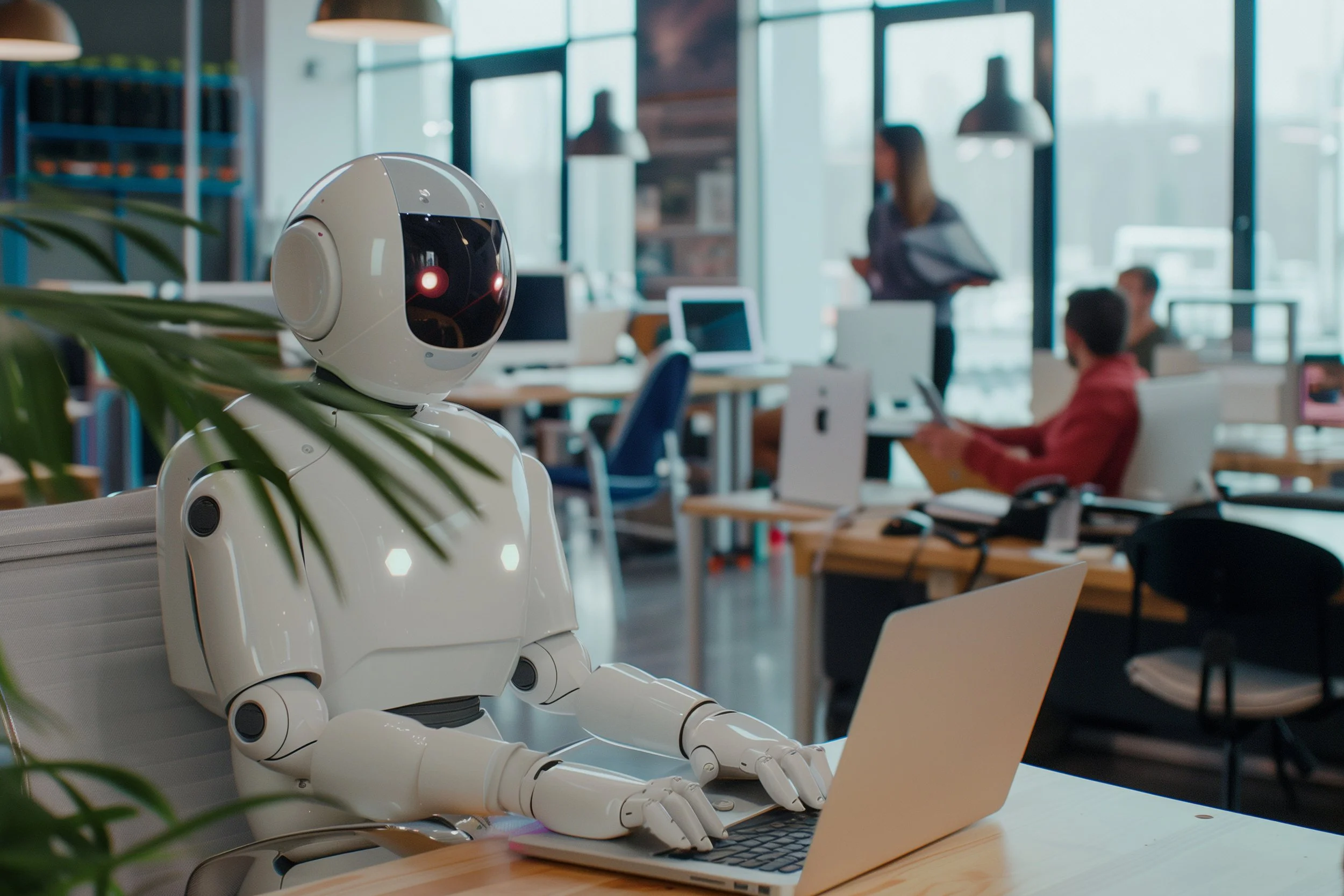
Since AI came on the scene there’s been non-stop speculation about how it will impact our lives, jobs, workplaces - basically everything under the sun. A lot of it’s been doom and gloom, but as the data begins to roll in, what we’re seeing in terms of AI’s impact on the workplace is both surprising and positive.
AI is changing how work gets done, but people are still very much required, and the physical space is responding to speed adoption of these new workflows. What does this look like exactly? A few examples will help explain.
The Individual Workstation Gets Larger
For years the amount of space allocated to individuals in the workplace has been dwindling. Offices gave way to cubicles, which gave way to bench workstations, which progressively shrunk in size. While individual space remains tight, we may have reached the minimum. Monitors are increasing in size, with some people needing, or preferring a third.
As AI agents become part of everyday workflows, humans will be increasingly managing multiple AI agents or tools simultaneously and may benefit from multiple screens to stay on top of these processes. From what we know of productivity, more screens and larger screens do seem to help, even if it becomes a little overwhelming. Sure, the workstation is now being sized for technology, but either way its growing and giving more space to individuals.
Users with dual 20-inch screens boosted productivity by 44% in text editing and 29% in spreadsheet editing over a single 18-inch monitor.
A single 24-inch widescreen delivered an even higher gain: 52% on text tasks and 26% on spreadsheets.
- Savills
Human Fatigue and Wellbeing Becomes A Priority
With AI tools we can work faster than ever before and expectations of productivity are rising. Not surprisingly this takes a mental toll.
More than ever our physical space needs to be designed to reduce mental load and support human wellbeing. We need to stay mentally sharp rather than rely on muscle memory to get our jobs done. Organizations, in an effort to amplify productivity, will benefit from improving the day-to-day wellbeing of their employees.
Employees who consider themselves frequent AI users report higher levels of burnout (45%) compared to those who infrequently (38%) use AI at work -Quantum Workplace.
Employees that operate multiple AI agents at once experience a 12% increase in fatigue
- Fortune
What’s really exciting, is that AI not only provides the impetus to make this happen but also provides the tools to better manage our environments. AI-powered building systems can continuously monitor occupancy, lighting, and HVAC needs, optimizing climate conditions in real time.
Silos Shrink as Tech Teams are Integrated Directly into Workflows
Tech roles in any organization have always been a supportive function. Employees need high-quality hardware and software to perform their tasks. That hasn’t changed, but what has changed is the speed of tool development and volume of tools that can be created. With AI the hard work of creating a new tool is no longer building it but gathering all the information and functionality from end users. That means spending more time working embedded with teams, asking better questions, and iterating rather than tinkering alone. What’s more is that teams often have to work together to gather the inputs and data for these tools. This equates to more tools, more cross collaboration, and better cohesion across organizations.
“Rather than having central tech teams build AI in isolation and hand it off to users, leading organization embed engineers directly alongside the teams responsible for outcomes”
- Fast Company
This will require new types of collaboration spaces to emerge. Shared work areas away from your desk that allow for ad-hoc partnerships to form will be key. Having a place to go, in a shared area, that’s more casual but includes supporting monitors and tech is what’s needed.
Critical Thinking, Creativity, and Collaboration Define the Workplace
As employees spend less time on routine tasks and more time on higher-value work, the most successful organizations will adapt their workplaces to amplify these skillsets. High performing focus spaces that allow us to think critically without interruption will be one component. Flexible work areas that allow teams and individuals to self-organize will be another. Classroom style knowledge sharing zones that promote small-scale educational moments will also be needed.
But designing the space is only the tip of the iceberg. The biggest successes will come from organizations that reorganize the culture of their workplace to maximize the potential of AI. Workplaces will need to shift from a container for workers to a hub of culture and ideas. Organizations will need to encourage time away from your desk, promote cross disciplinary connections, and support moments of perceived unproductivity to maximize the benefits of this watershed moment in work.
“AI adoption fundamentally changes how work is performed and has the potential to alter organizational structures.
Leaders who encourage collaboration and creativity now are more likely to see the innovation benefits from AI they expect in the future.”
-Keith Bujak, Steelcase WorkSpace Futures
Speculation or Science?
The future is what we imagine it to be. And these potentials are more about an acceleration of current trends and best practices than wholly new ideas. We can’t predict the future, but we can design the spaces that give humanity the best chance to capitalize on the benefits of its own innovations.