
February 2026
The World of Shared Seating
A myriad of terms exist for “shared seating” in the workplace – agile work, activity-based working, hot desking, unassigned seating, etc. All the various terms can feel confusing. But don’t worry, you’re not alone, and we’re here to help demystify the jargon.
What types of seating models are under consideration?
Pre-pandemic workplaces often held a structured approach to office layouts, with strict seating arrangements and assignments. But as more organizations adopt hybrid work, many are rethinking their workplace.
One of the first decisions? Whether to try some version of shared seating or preserve assigned seats. Which one to select depends on considerations such as collaboration requirements, privacy needs, and space utilization. One size may not fit all. Critical teams that are in-office more often may preserve assigned seating, while other teams could leverage shared seating. This blended approach allows organizations to optimize space, support flexibility, and maintain privacy concerns for some - all while ensuring a seamless experience for employees.
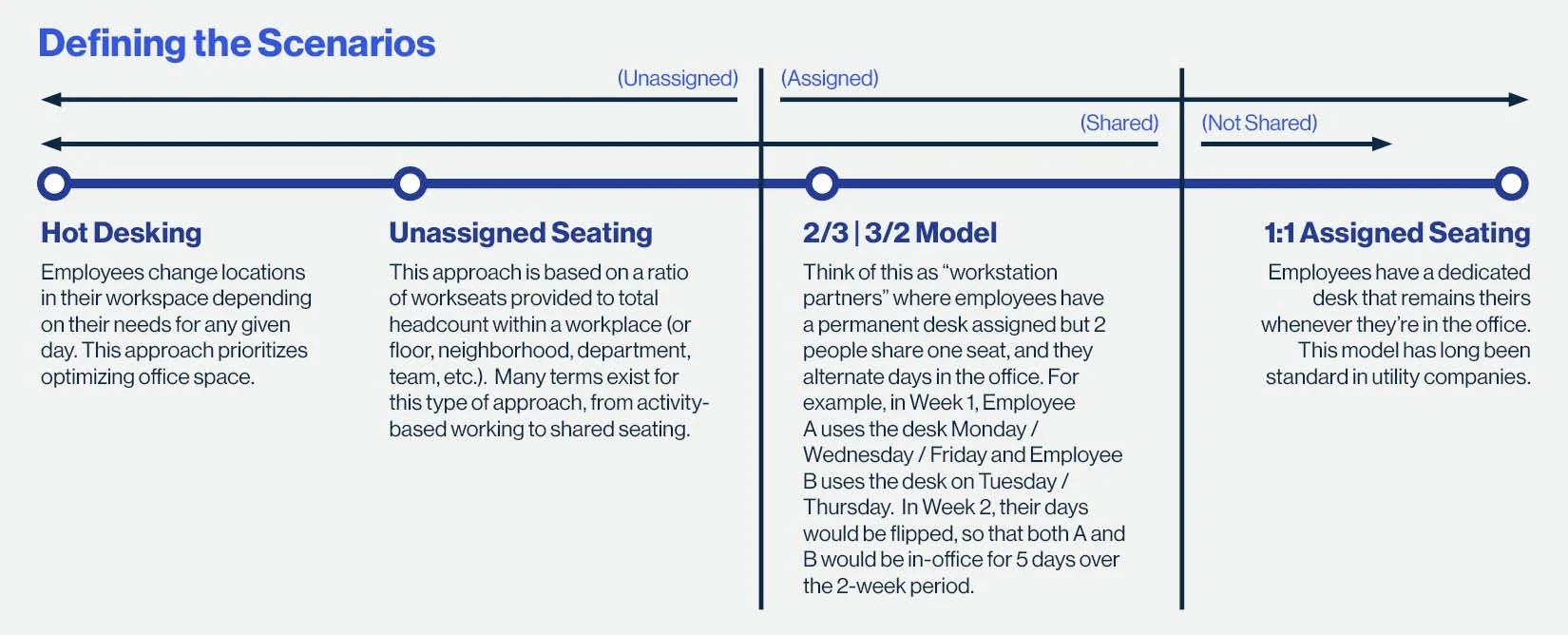
Any shared seating model requires a shift in workplace program and clear policies to ease the change.
Programmatic Change: Through ongoing change management efforts, we realize communication to employees centers around “We versus Me.” When employees lose their assigned seats, they need to feel like more choice is then provided to them as alternative work points, offered to the larger department or organization overall. For example, the “Activity-Based Work” model (ABW) focuses on providing different zones - quiet, collaboration, focus pods, etc. - that offer spaces for specific tasks while still reducing overall space needs through shared seating.
The reality of hybrid work demands the need for more private rooms to conduct phone calls or engage in confidential conversations throughout in-office workdays. Working from home has allowed many people to enjoy privacy amid a distraction-free environment. Replicating this level of privacy within the office can significantly contribute to maintaining productivity levels. These settings can range from formal to more informal spaces to meet and vary in visibility - open, semi-enclosed, to fully enclosed, soundproof rooms.
Technology Upgrades: Make it easy for employees. If organizations are facing waning attendance in-office, first focus on improving the necessities of day-to-day work. (It’s not always about the above-and-beyond amenities). Meeting room video conferencing should be seamless and available in every room. Desk booking should be effortless, and hardware should always be accessible and consistent.
Etiquette Clarity: Change management is critical to introducing new ways of working. Clear rules on behaviors, expectations, respecting privacy, noise levels, and booking should be communicated prior to the change. Sharing honest answers as decisions are made make employees feel validated and ease operational issues that may arise once the change takes place.