
July 2026
Why the Best Offices Don’t Feel Like One
What Recent Data Tells Us about Workplace Experience
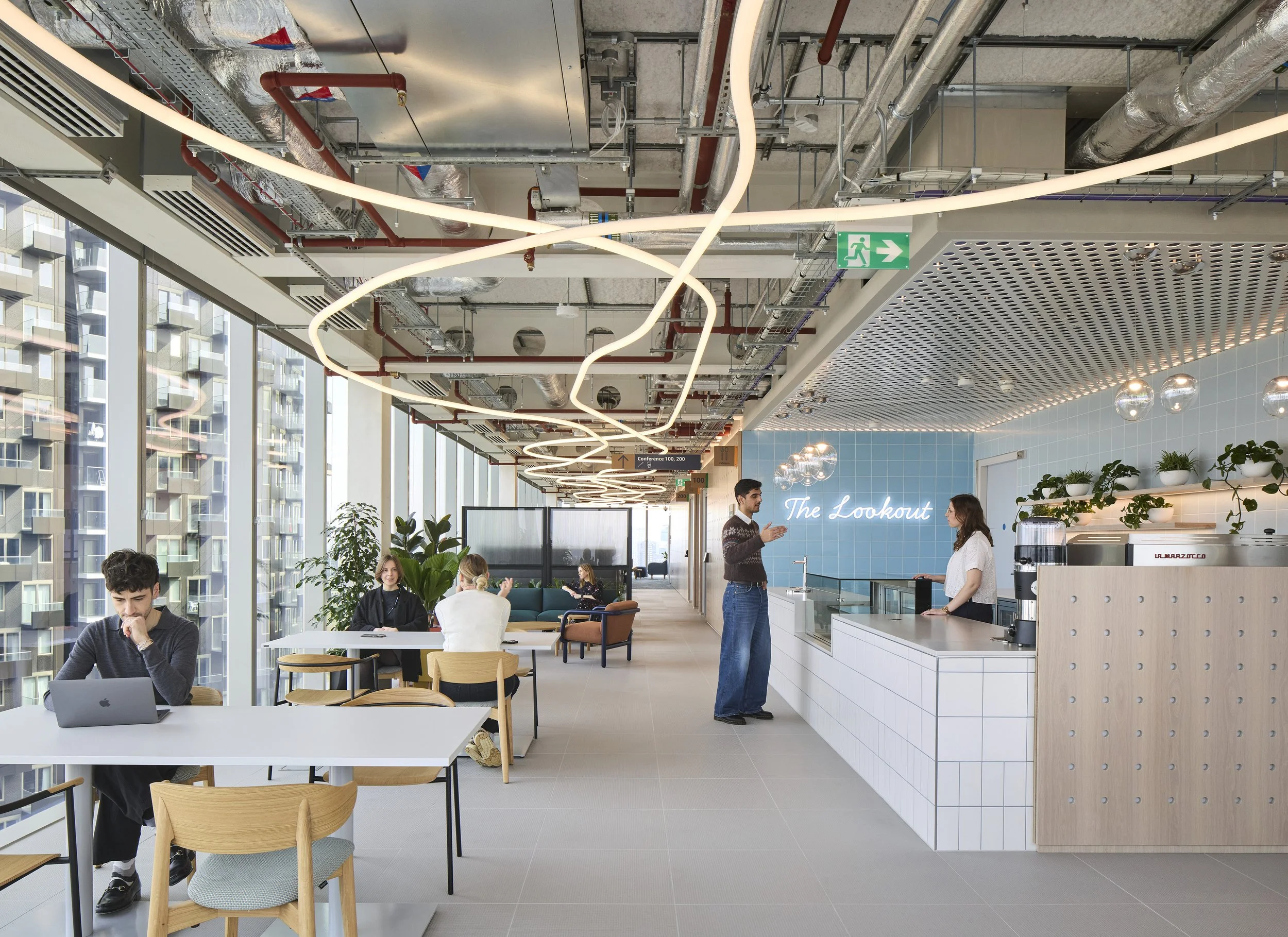
For most organizations, two investments outweigh all others: people and real estate. Yet for decades, these assets were rarely designed with the other in mind; the office functioned as an operational container, a place to put desks, display a logo, and support daily work. However, even prior to the pandemic, concerns about declining workplace relationships and employee connections were already growing. The pandemic did not create these issues; it simply made them impossible to ignore.
Today, employees still see value in the office, but not in its traditional form.Gensler’s 2025 Global Workplace Survey found that employees spend approximately 55% of their workweek in the office yet believe they need to be closer to 65% to perform at their best. At the same time, only 26% of strongly agree that their current workplace helps them to do their best work. The challenge, then, is no longer convincing employees to return to the office, but creating workplaces that are worth returning to.
Environments rooted in architectural character, local history, and curated artwork allow employees to be immersed in an organization’s culture instead of simply just seeing it.
Layered materials, thoughtful detailing, and narrative-driven spaces encourage people to explore, linger, and connect – not only with one another or the space, but also with the purpose behind their work.
One of the most significant shifts has been the evolution of workplace branding. For years, corporate identity was communicated through logos, color palettes, and mission statements applied to otherwise generic spaces.
Today, workplace design is an expression of organizational value rather than corporate graphics.
From Drab Logos to Curated Connection
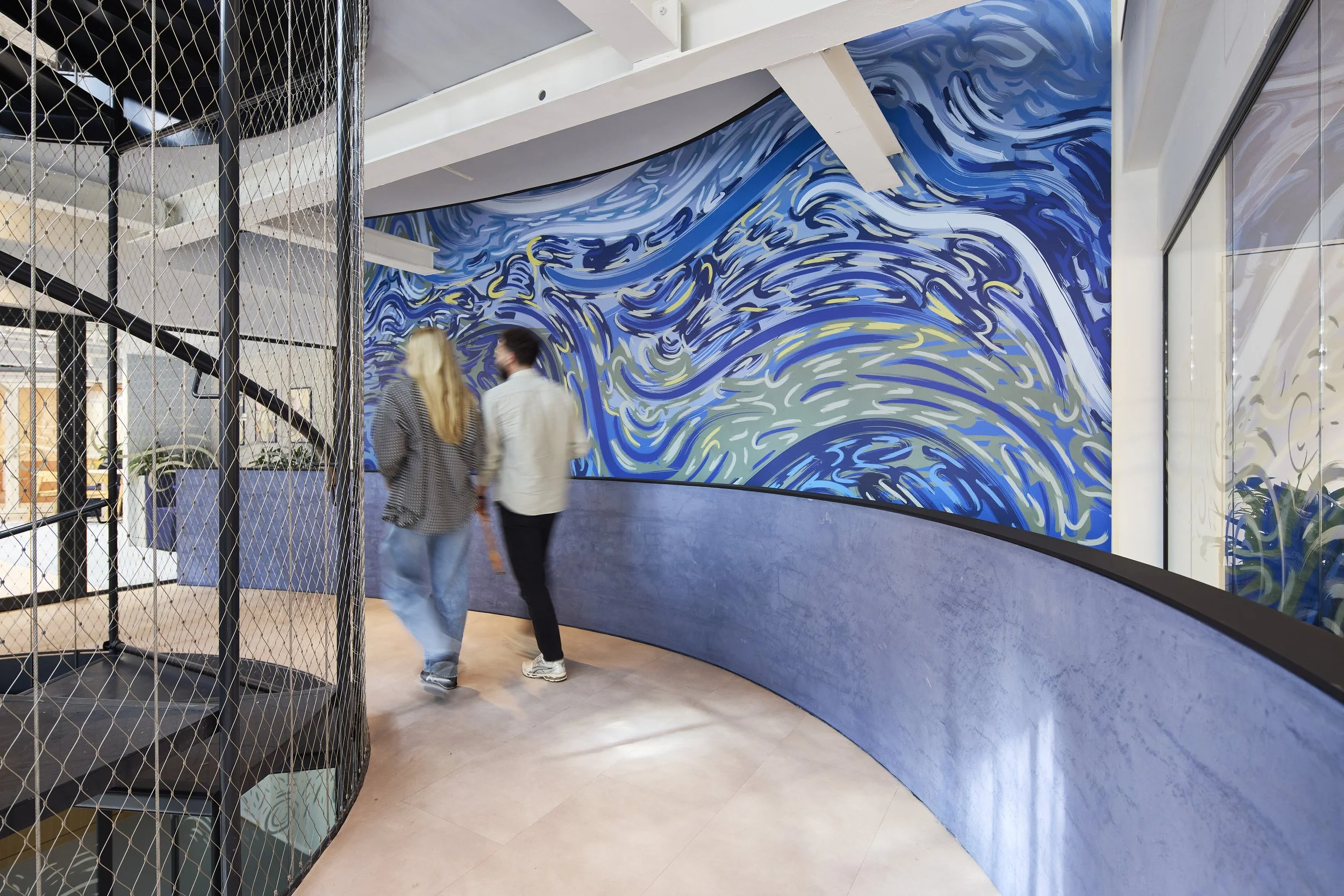
Rather than serving as a backdrop for productivity, the workplace becomes a physical manifestation of what an organization stands for.
This transformation coincides with the rise of hospitality-inspired workplace design. Increasingly, offices borrow qualities traditionally associated with hotels, cultural institutions, and residential environments. Welcoming arrival experiences, comfortable social spaces, tactile materials are intentionally placed, designed for lingering rather than passing through. Employees are moving away from conventional corporate settings in favor of workplaces that feel restorative, inspiring, and human-centered.
The Hotelification of the Office
According to Gensler’s research,only 14% of employees prefer a traditional workplace. Instead, workers increasingly seek environments that resemble nature retreats or creative studios, with access to outdoor spaces, natural light, collaborative work areas, and spaces that support wellness and meaningful social interaction.
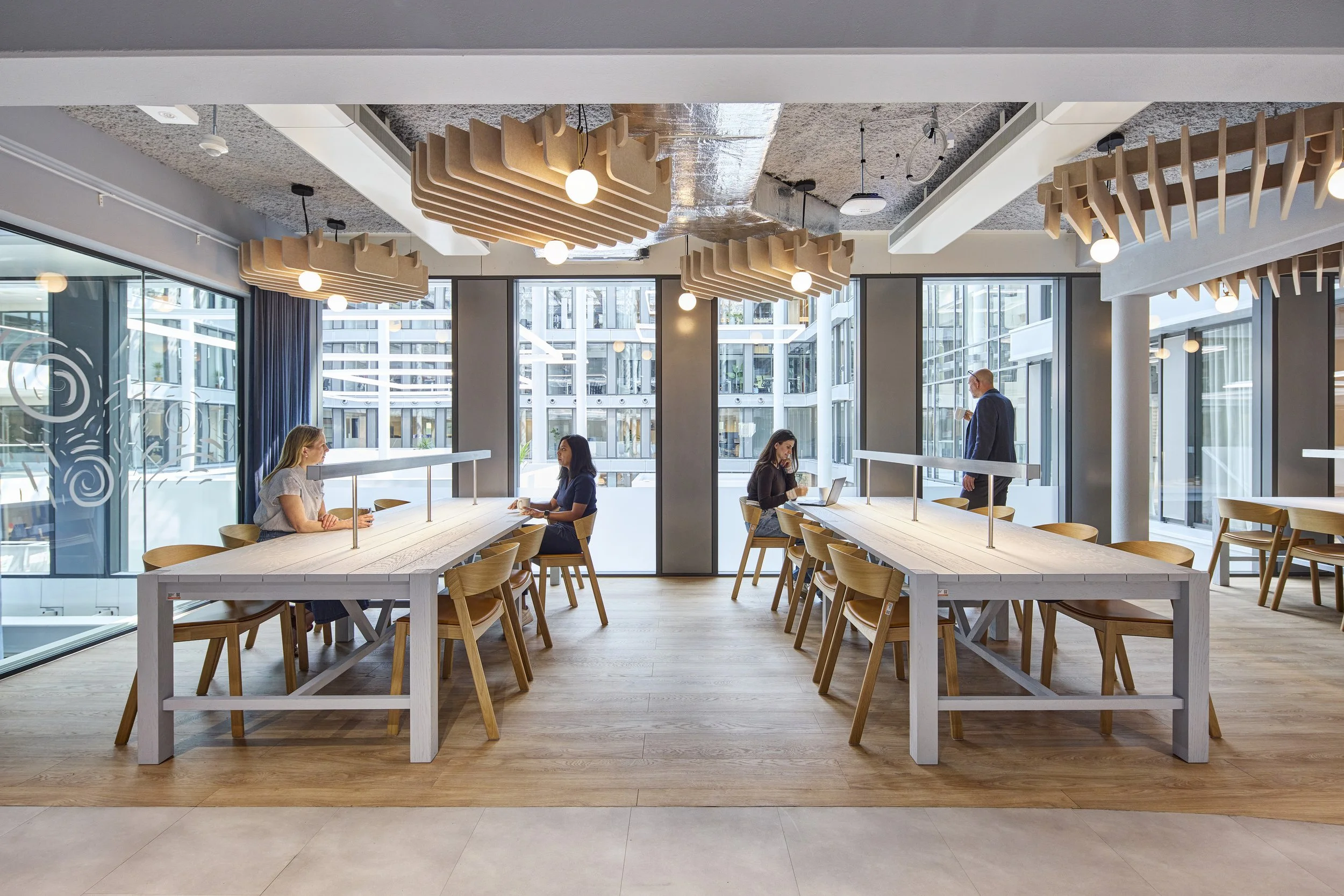
Ultimately, experiential workplace design recognizes that investing in the built environment is an investment in human capital. Gallup’s annual State of the Global Workplace found that in 2025, employee engagement fell to its lowest at 20%, costing an estimated of $10 trillion global GDP. And while more than half of American employees now self-classify as lonely; belonging, on the other hand, fulfills a fundamental human need for deep connection: to people, places, and shared experiences.
Research consistently shows that employees who work in great workspaces report higher satisfaction, stronger organizational commitment, and are significantly more likely to stay with their employer. Purposeful design, therefore, is not simply an aesthetic decision; it is a strategic one.
Grounding this Change with Data
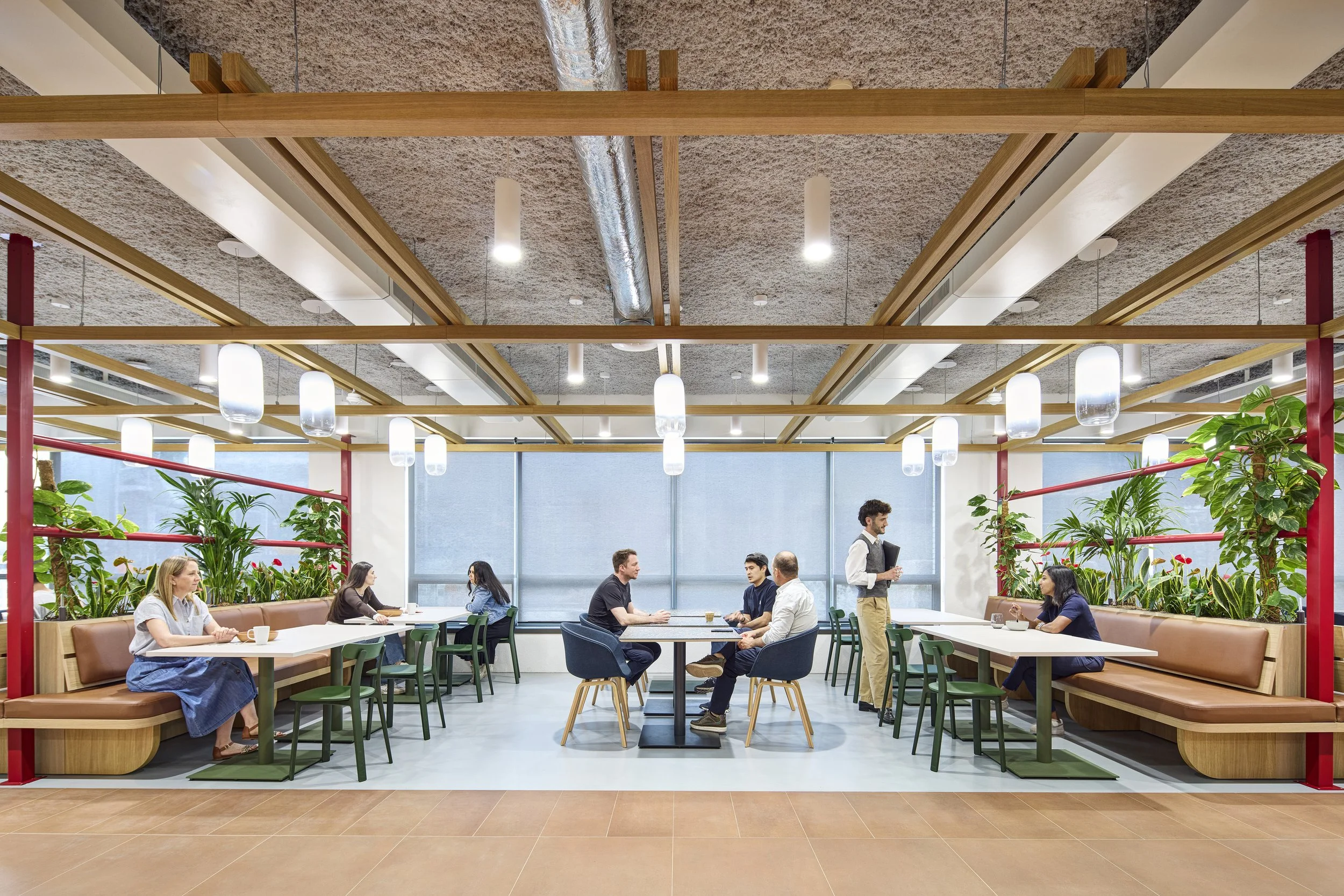
The office should not be seen as a cost to optimize. Workplace branding is no longer decoration. It is infrastructure that communicates culture, reinforces belonging, and shapes how employees experience their organization every day. At its best, it is an experience that reminds people why they choose to be there as well as what their organization believes its people are worth.